Navigating the Chaos: Decoding the Vision and Controversies of Elon Musk
Welcome back to the companion blog for Business Growth Talks. If you have been following our audio episodes, you know that we love diving deep into the minds of the people who are radically reshaping our world. Today, we are expanding on a topic that has generated massive amounts of discussion, debate, and polarizing opinions across the global business landscape. We are talking about Elon Musk. Is he a visionary saviour pushing humanity forward into the stars, or is he a chaotic, erratic manager whose personal conduct undermines his own achievements? The truth, as is usually the case with complex modern business titans, lies somewhere in a very messy, fascinating middle ground.
When we look at the pantheon of modern business history, figures like Musk command an outsized presence. They dominate headlines, shift stock markets with a single tweet, and capture the imagination of millions. But admiration often blinds us to the real human and operational costs of their leadership styles. To truly understand Musk, we have to look past the hype, analyze his extraordinary triumphs, and confront the turbulence that follows him everywhere he goes. Let us unpack the enigma of Elon Musk, exploring how visionary ambition and controversial personal conduct collide in today's fast-paced business world.
Elon Musk: Visionary Ambition Meets Turbulent Leadership
To understand Elon Musk, one must first grapple with the sheer scale of his ambition. Most entrepreneurs are content with disrupting a single industry. They want to build a better software company, streamline a specific supply chain, or improve a localized service. Musk, on the other hand, woke up one day and decided he wanted to fix global sustainable energy, revolutionize international transportation, colonize Mars, and merge the human brain with artificial intelligence. These are not merely business plans; they are science fiction plots brought into reality through sheer willpower.
The Psychology of the Impossible
Musk operates from a first-principles thinking model, stripping problems down to their most fundamental physical truths and reasoning up from there. This allows him to see possibilities where others see insurmountable roadblocks. When he founded SpaceX, traditional aerospace experts laughed him out of the room. Rockets were supposed to be astronomically expensive, single-use hardware built by massive bureaucratic defense contractors. Musk asked a simple question: What are rockets made of? Aerospace-grade aluminum, titanium, copper, and carbon fiber. What is the raw material cost of those metals? A tiny fraction of the retail price of a rocket. Therefore, he reasoned, we can build them ourselves and reuse them.
However, this relentless pursuit of the impossible comes with a psychological toll—both for Musk and for everyone who works for him. His leadership style is notoriously demanding. He is famous for setting seemingly impossible deadlines, sleeping on the floor of the Fremont factory during production hell, and expecting his engineering teams to work superhuman hours. For Musk, the mission is always paramount. If a deadline is missed, the future of humanity—whether through climate change mitigation or becoming a multi-planetary species—is supposedly put at risk. This elevated sense of urgency creates a high-pressure crucible that produces incredible technological breakthroughs, but it also burns out brilliant talent and fosters a culture of fear.
SpaceX and Tesla: Redefining Industries Against the Odds
It is easy to critique a leader's personality, but the tangible results of Musk's ventures cannot be ignored. SpaceX and Tesla have fundamentally altered the trajectory of two massive, entrenched industries: aerospace and automotive.
Tesla and the Electric Vehicle Revolution
When Tesla first entered the automotive scene, electric cars were widely viewed as slow, ugly, golf-cart-like novelties that nobody actually wanted to drive. Traditional car manufacturers had little incentive to change their profitable internal combustion engine lines. Musk changed the narrative completely. By focusing on performance, design, and a robust Supercharger network, Tesla proved that electric vehicles could be aspirational luxury items first, and environmentally friendly choices second.
Today, virtually every major legacy automaker has scrambled to pivot to electric vehicles, a transition that was catalyzed almost single-handedly by Tesla's market pressure. Tesla forced an entire century-old industry to modernize, proving that sustainable transportation was not just a pipe dream, but a commercially viable and dominant future.
SpaceX and the Commercial Space Age
SpaceX’s achievements are perhaps even more staggering. By successfully developing reusable orbital-class rockets, SpaceX dramatically lowered the cost of access to space. Before SpaceX, launching payloads was an exclusive domain of superpower nation-states and massive corporate conglomerates. Now, SpaceX routinely launches satellites, resupplies the International Space Station, and powers the Starlink global internet constellation.
What makes these achievements remarkable is how close both companies came to complete bankruptcy. Tesla famously faced "production hell" with the Model 3, and SpaceX was days away from running out of money before its fourth successful Falcon 1 launch saved the company. Musk's willingness to bet his entire personal fortune on the line repeatedly is a testament to a level of risk tolerance that borders on the reckless, yet ultimately pays off in historic fashion.
The Cost of Chaos: Decoding Musk's Public Decisions and Persona
While the triumphs of Tesla and SpaceX paint a picture of a visionary genius, the other side of the ledger reveals a deeply polarizing figure. In recent years, Musk’s public behavior, erratic decision-making, and social media presence have introduced a new variable into the equation: brand damage.
The Twitter/X Acquisition: A Case Study in Impulse and Ideology
Nothing highlights the turbulent nature of Musk’s leadership quite like his tumultuous acquisition of Twitter, now rebranded as X. What began as a seemingly impulsive social media poll and a hostile takeover bid transformed into a chaotic saga of legal battles, sudden layoffs, and shifting platform policies.
Musk positioned the purchase as a defense of absolute free speech and an effort to rid the platform of bots. However, the execution was marked by extreme instability. Slashed moderation teams, volatile policy changes, and controversial public statements alienated major advertisers, causing a sharp drop in platform revenue. For the first time, Musk’s public persona began to directly impact the financial health and public perception of one of his primary assets in a profoundly negative way.
The Personal Toll of the Spotlight
We must also examine how a leader's personal conduct affects organizational stability. When a CEO becomes a daily fixture in the culture wars and geopolitical debates, it creates distractions for employees, investors, and customers alike. Consumers who love Tesla’s cars may find themselves repulsed by Musk’s online commentary. Investors who rely on his steady hand at the helm worry about his divided attention across multiple companies, including Neuralink, The Boring Company, and xAI.
This raises a critical question for modern governance: Can a company scale sustainably when its entire identity is inextricably tied to the volatile personality of a single flawed human being? History suggests that while charismatic founders can jumpstart a revolution, true institutional longevity eventually requires a transition to stable, systemic leadership.
Lessons from the Titans: Balancing Innovation and Leadership Challenges
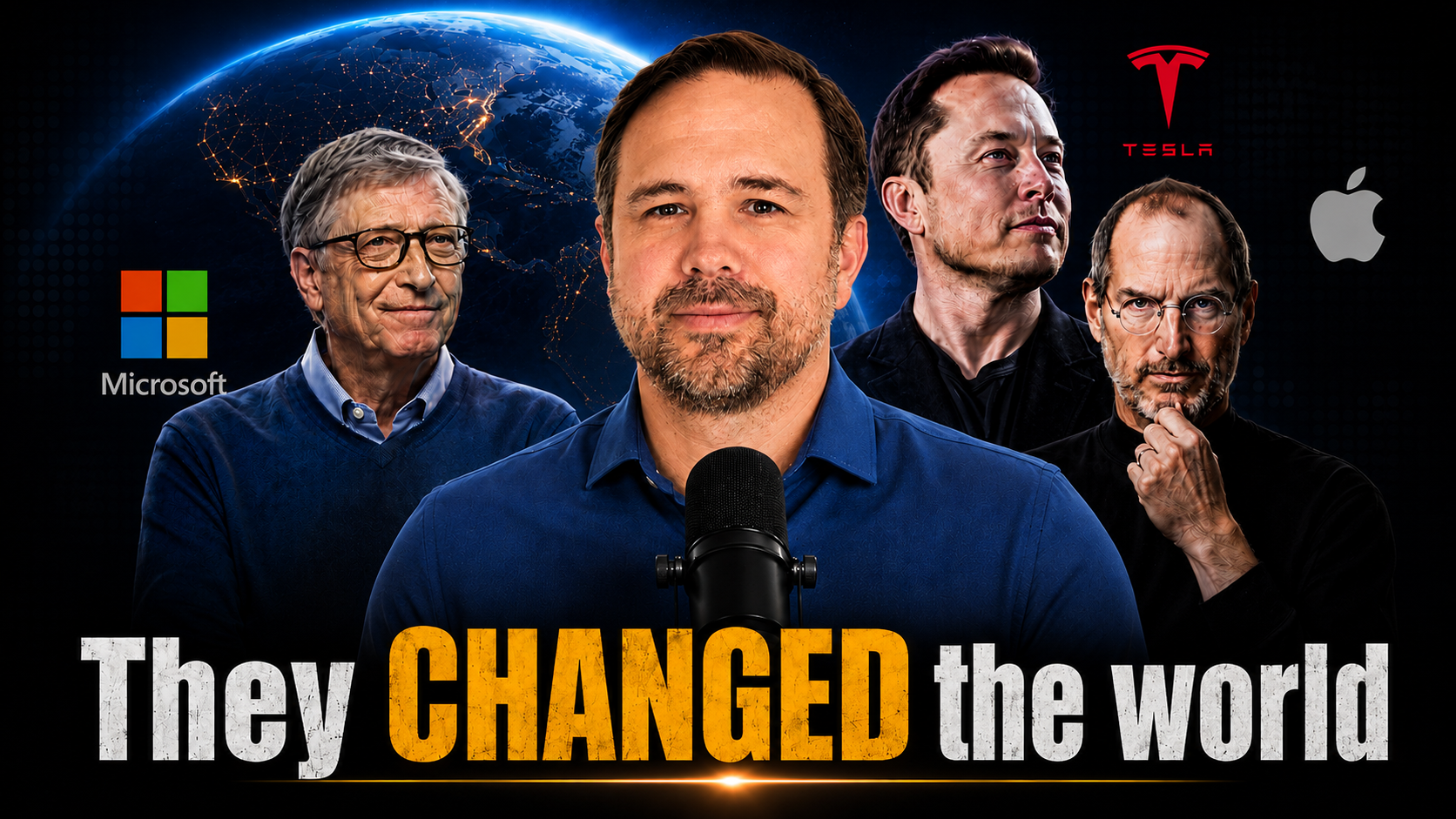
Elon Musk does not exist in a vacuum. He is part of a rare lineage of historical business titans who radically transformed our world, standing alongside figures like Steve Jobs and Bill Gates. When we study these leaders, we see striking patterns emerge. They all shared an uncompromising vision, an ability to bend reality to their will, and a profound disregard for the status quo. However, they also shared a dark side: fractured personal relationships, intense management cruelty, and a propensity for ruthless business tactics.
Steve Jobs revolutionized personal computing, music, and mobile communication, yet he was notoriously harsh with employees and famously denied paternity early in his life. Bill Gates built a software monopoly that crushed competitors with aggressive strategies before shifting his formidable intellect and wealth toward eradicating diseases globally through philanthropy. Musk continues this tradition of the brilliant, flawed titan.
What can contemporary entrepreneurs and business leaders learn from this? The primary lesson is that greatness does not require cruelty, nor does innovation require chaos, even if history often conflates the two. Many modern founders attempt to emulate Musk’s grueling work hours or Jobs’s abrasive perfectionism, mistakenly believing that being difficult makes them visionary. In reality, sustainable business growth relies on building resilient systems, empowering teams, and fostering an environment of psychological safety where innovation can thrive without requiring continuous crisis management.
We must learn to admire the audacity of these titans without romanticizing their toxicity. We can celebrate the electric vehicle revolution and reusable rockets while holding leaders accountable for how they treat their workforce and navigate their public responsibilities.
Conclusion: Navigating the Legacy of Disruptive Entrepreneurs
As we navigate the complexities of modern business and technology, the legacy of Elon Musk serves as both an inspiration and a cautionary tale. He has shown us that the future is not fixed—that with enough ingenuity, capital, and sheer stubbornness, we can reshape industries that seemed immutable for generations. Yet, he has also demonstrated the profound dangers of unbridled ego, impulsive decision-making, and the collateral damage left in the wake of hyper-ambitious leadership.
Whether you view him as a modern-day Edison or a cautionary symbol of corporate governance gone awry, Musk forces us to confront the true price of innovation. Balancing the drive for monumental progress with ethical leadership remains one of the greatest challenges for the next generation of builders.
If you want to explore these themes further and dive deeper into the minds of the people who shaped our modern world, make sure to listen to our dedicated podcast episode. We break down the lives, achievements, and dark sides of Musk, Gates, and Jobs in comprehensive detail. You can listen to the full discussion by checking out 3 Titans That CHANGED Business In My Lifetime - Musk, Gates and Jobs. Join the conversation, share your thoughts, and keep pushing the boundaries of what is possible in your own business journey.

Why Boring Businesses Make Millions