Why Fast Growth Isn't Always the Goal: Embracing the Slow and Steady Model
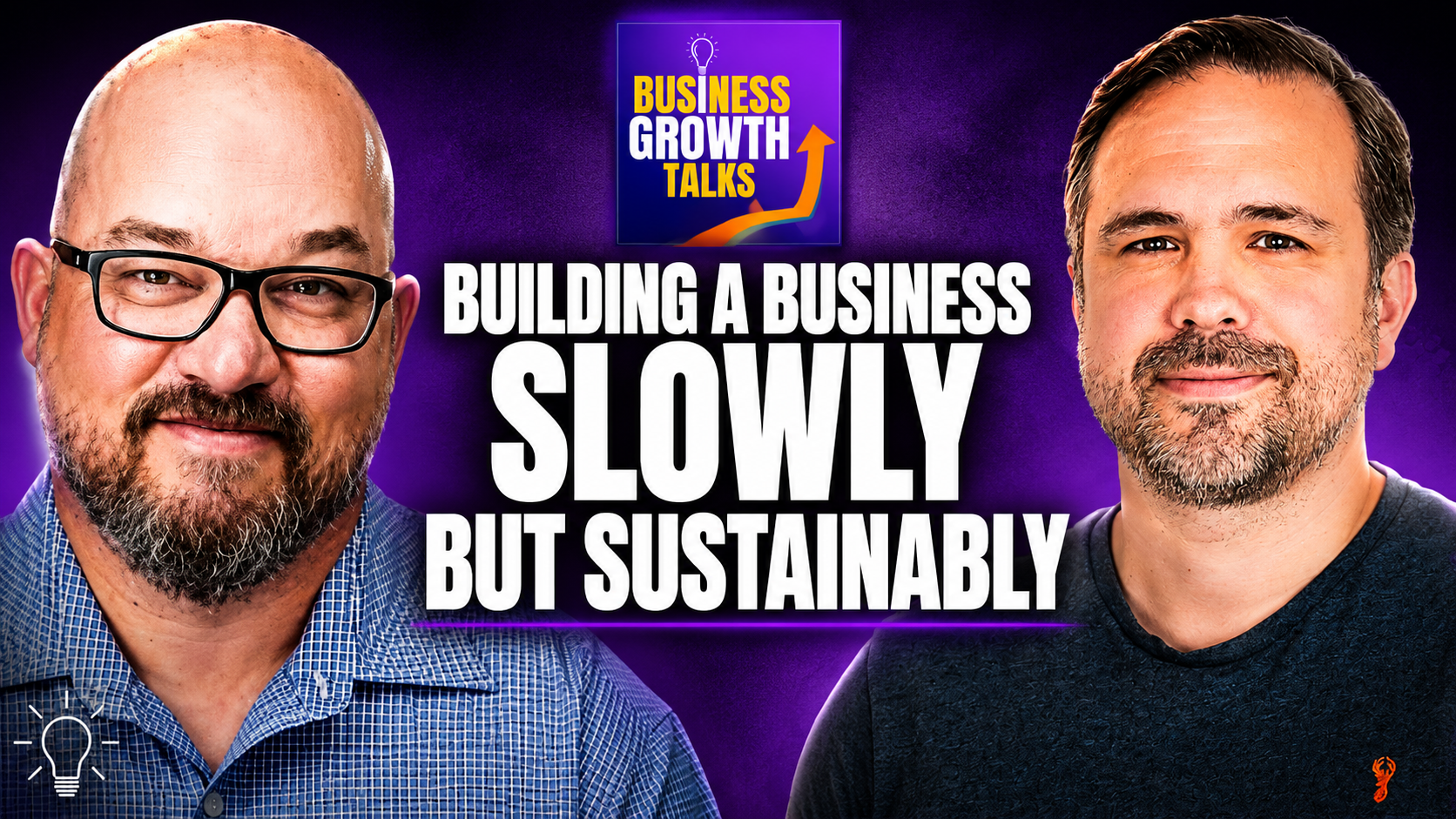
In today's hyper-connected business landscape, the narrative of "growth at all costs" has become the standard barometer for success. We are constantly inundated with stories of startups hitting unicorn status overnight, securing massive rounds of venture capital, and scaling their headcount to the thousands within a few short years. But is this frantic pace actually healthy, or even sustainable? In our latest episode of the podcast, How to build a business slowly and not following trends with Dusty Gulleson, we explore a refreshing counter-narrative. By sitting down with Dusty Gulleson, CEO of Tectonic, we deconstruct the myth that speed is the only indicator of a thriving company. In this blog post, we will expand on why prioritizing sustainable, slow growth can lead to a more durable and rewarding business trajectory.
The Silicon Valley Trap: Why We're Obsessed With Fast Growth
The cultural obsession with "blitzscaling" has created a distorted view of what it means to be an entrepreneur. Silicon Valley has successfully convinced a generation of founders that if you aren't growing exponentially every quarter, you are effectively failing. This mindset treats companies like rocket ships, where the objective is to burn through fuel as quickly as possible to reach a distant destination. However, this model often ignores the massive structural instability it creates.
When growth happens too fast, company culture, service quality, and operational integrity are often the first casualties. Teams are stretched thin, onboarding becomes a frantic rush, and the "why" behind the business is often buried under the weight of hitting arbitrary KPIs. The trap here is the assumption that speed equals momentum. In reality, speed without direction or stability is merely a prelude to a crash. By breaking away from this frantic pace, leaders can reclaim their ability to make strategic, long-term decisions rather than reactive, short-term survival moves.
Rethinking Success: The Case for Sustainable, Slow Growth
Sustainable growth is not synonymous with stagnation. It is simply the intentional act of matching the pace of your expansion to the strength of your foundation. Think of a skyscraper: the taller you want to go, the deeper and wider the foundation must be. In a service-oriented business, the foundation is comprised of your processes, your internal culture, and your client relationships.
When you choose a slower path, you gain the luxury of refinement. You can test new service offerings on a smaller scale, refine your internal workflows, and hire people who truly align with your mission. This approach creates a "compounding effect" where the trust and reputation you build in the early years act as a force multiplier for later growth. Instead of chasing trends, you become an expert in your niche, providing deep value that fleeting, fast-growth competitors simply cannot replicate.
Lessons from the 'Feral Kid': How Early Experiences Shape Long-Term Strategy
During our conversation with Dusty Gulleson, we discussed how his upbringing as a "feral kid" in Indonesia fundamentally shifted his perspective on business. Often, our professional philosophies are born from our most formative life experiences. Growing up in a cross-cultural environment taught Dusty to value adaptability, humble communication, and the importance of listening. These are not qualities typically fostered in a high-pressure corporate boardroom, yet they are exactly what you need to navigate the complexities of human-centric business.
When we bring our authentic selves to work, we are less likely to fall for the hollow "hustle culture" tropes. Dusty’s background allowed him to see the value in building Tectonic with a focus on people rather than just metrics. This is a critical lesson for any entrepreneur: your history is your competitive advantage. Whether it is your resilience, your ability to bridge different worlds, or your patience in chaotic environments, leveraging your personal story is the fastest way to build a brand that feels real and authentic to your clients.
Building Trust: The Asset You Cannot Expedite
One of the core themes of our discussion was the reality that trust cannot be rushed. In digital transformation and professional services, trust is the currency. You can buy ads to generate leads, you can hire sales teams to pitch your services, but you cannot "hack" the development of deep, reliable client trust. Trust is the result of thousands of micro-interactions where you consistently deliver what you promised.
The fast-growth trap often forces businesses to outsource or automate their client interactions too early. When you prioritize speed, you lose the touchpoints that build long-term relationships. By choosing a slower, more deliberate path, you remain close to your clients. You witness their pain points firsthand, you participate in their successes, and you become a partner in their mission. This is the difference between being a vendor and being a trusted advisor.
Prioritizing Service Over Scaling: The Tectonic Approach
The Tectonic philosophy centers on a service-oriented DNA. By focusing on the quality of the service provided rather than the quantity of clients on the roster, the firm has been able to maintain a level of excellence that is rare in the tech industry. It’s an approach that asks, "How can we solve this problem perfectly?" rather than "How can we solve this problem for a thousand people by next month?"
Service-oriented growth forces you to become disciplined. It keeps your team focused on delivering genuine value, which in turn leads to client loyalty. Loyalty is the ultimate hedge against market volatility. In tough economic times, those who have built their business on service and relationships remain standing long after the flash-in-the-pan companies have evaporated.
The Role of Pragmatic Governance and Documentation in Digital Transformation
Technological innovation is exciting, but it is dangerous when decoupled from pragmatic governance. Many companies rush into AI and digital transformation tools hoping for a magic bullet, only to find themselves with a messy, unmanageable infrastructure. Documentation and governance are the unglamorous bedrocks of long-term success. They are the systems that ensure your company remains operational and reliable as you grow.
Dusty emphasizes that you must prove your value before you focus on scaling. This applies perfectly to digital tools. Don’t implement an automated system until you have mastered the manual process and understand exactly what is being automated. By keeping governance front and center, you ensure that as your business grows, it remains orderly and efficient rather than bloated and chaotic.
Why Mission-Driven Organizations Win in the Long Run
When a business is mission-driven, the mission acts as a North Star. When market trends shift or competition spikes, a company that knows exactly why it exists can pivot without losing its soul. A mission-driven organization isn't just trying to maximize quarterly profit; it is trying to achieve a specific outcome for its clients and its community. This sense of purpose attracts better talent, creates more loyal customers, and keeps the leadership team grounded through the inevitable ups and downs of the market.
Final Thoughts: Embracing Patience as Your Greatest Competitive Advantage
In a world that celebrates the sprint, there is an immense, untapped power in running the marathon. Building a business slowly allows you to construct something that lasts, something that has depth, and something that genuinely serves its purpose. The journey with Dusty Gulleson reminds us that patience is not a weakness; it is a strategic choice. By focusing on deep trust, pragmatic governance, and a mission-driven approach, you are not just building a company—you are building a legacy.
I encourage you to take the time to listen to the full episode at How to build a business slowly and not following trends with Dusty Gulleson. As we discussed, success is a marathon, not a sprint, and there is no better time than now to start building your business on a solid, sustainable foundation. Stay consistent, stay patient, and keep prioritizing the relationships that matter most.
Stop Losing Money: Why Your Business Needs a Structured Follow-Up Process