Content as Your Business's Most Valuable Asset
Introduction: Content Beyond Marketing
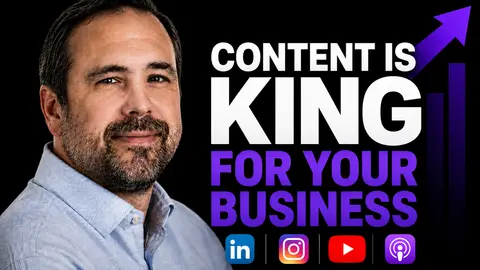
Welcome back to the blog, and if you're just tuning in, make sure to check out our latest podcast episode, "From Invisible to Influential: Crafting Content that Grows Your Business With Host". In this episode, we really dug deep into a fundamental shift in how businesses should be thinking about content. It's no longer just a set of brochures or social media posts designed to grab attention for a fleeting moment. Instead, we explored the transformative power of viewing content as your business's most valuable, strategic asset. This blog post is designed to expand on those core ideas, delving into how this mindset can build unshakable trust, cultivate deep authority, and ultimately, drive sustainable growth – even when you're not actively trying to make a sale.
In today's noisy digital landscape, it's easy to fall into the trap of seeing content creation as just another task on the marketing to-do list. We create blog posts, social media updates, videos, and podcasts, often with the immediate goal of generating leads or driving traffic. While these are certainly valid outcomes, this episode and this post aim to lift our gaze. We want to encourage you to see content as something far more profound: a long-term investment that works tirelessly for your business, building a foundation of credibility and influence that paid advertising simply cannot replicate. Think of it as planting seeds that, with consistent nurturing, will yield a bountiful harvest for years to come.
Content as Your Business's Most Valuable Asset: A Paradigm Shift
The central thesis of our conversation is this: content is not merely a vehicle for marketing; it is a fundamental business asset. This might sound like a subtle distinction, but the implications are vast. When you classify content as an asset, you begin to treat it with the same strategic rigor you would any other significant investment, like intellectual property, skilled employees, or proprietary technology. It’s something that generates ongoing value, appreciates over time, and contributes directly to your business's overall worth and resilience. This paradigm shift means moving away from a transactional view of content creation – where each piece is judged by its immediate return – to a relational perspective, focusing on how content builds enduring connections and authority.
Consider the traditional marketing funnel. It’s often linear and focused on pushing potential customers through a series of stages towards a purchase. Content, however, operates in a more organic, non-linear fashion. It’s about being present and helpful at every stage of a customer's journey, even before they know they have a need. When a potential client is in the research phase, seeking information and understanding their options, it’s your content that can position you as a trusted advisor. This is the essence of treating content as an asset: it's a permanent fixture that attracts, educates, and nurtures, rather than a fleeting advertisement designed for immediate conversion. It becomes a part of your business infrastructure, like a well-organized library or a knowledgeable customer service team, always available and always working.
This shift in perspective also impacts how you allocate resources. Instead of viewing content as an expense, you start to see it as an investment. This means dedicating time, budget, and strategic planning to content creation and distribution. It encourages a focus on quality over quantity, ensuring that each piece of content is well-researched, valuable, and aligned with your target audience's needs and interests. When you approach content with this asset-based mindset, you’re not just producing marketing materials; you’re building a digital legacy that will continue to serve your business long after the initial creation date.
Building Trust and Authority: The Long Game of Content
In an era saturated with noise and skepticism, trust is the ultimate currency. And for businesses, there is no more potent architect of trust than consistent, high-quality content. Unlike overt sales pitches that can trigger immediate defenses, content offers value upfront, without asking for anything in return. When you consistently publish insightful articles, informative videos, or helpful guides that address your audience's pain points and answer their questions, you begin to build a reservoir of goodwill and credibility. This is the long game of content, and it’s a game where businesses that play strategically will invariably win.
Think about the difference between being interrupted by a sales call and discovering a solution to a problem through a well-written blog post or a helpful explainer video. The latter approach fosters a sense of genuine connection and reliance. Your audience begins to associate your brand with helpfulness, expertise, and a willingness to share knowledge freely. This is how authority is built – not through bold declarations of expertise, but through consistent demonstrations of it. Each piece of content you create is like a brick in the foundation of your business's authority. Over time, these bricks interlock to form an unshakeable structure that potential clients can rely on.
This process of building trust and authority is a marathon, not a sprint. It requires patience and a commitment to delivering value consistently. It means understanding your audience deeply – their challenges, their aspirations, their questions – and then creating content that directly addresses these aspects. When potential customers encounter your brand during their information-gathering phase, they’re not just seeing a company; they’re seeing a knowledgeable entity that has already helped them in countless ways through its content. This pre-established relationship of trust makes them far more receptive when you eventually do introduce a product or service. They already know, like, and trust you because you've earned it through your content.
Content's Role in the Buyer's Journey: Being There When It Matters
The traditional buyer's journey is often depicted as a funnel, but in reality, it's far more complex and often circular. Potential customers might jump back and forth between stages, conduct extensive research, consult with peers, and reconsider their options multiple times. This is precisely where content excels. It allows you to be present and supportive throughout this entire, often messy, process. By anticipating the questions and concerns your audience will have at each stage, you can create content that provides the answers they need, precisely when they need them.
Imagine someone who is just beginning to realize they have a problem. They might not even know the right terminology to search for. This is the awareness stage. Your content can help them identify and articulate their problem. As they move into the consideration stage, they're looking for solutions. Your content can then highlight different approaches and explain the benefits of your chosen methodology or category of product. Finally, in the decision stage, they're comparing specific providers. Your content can showcase your unique value proposition, case studies, and testimonials, helping them make an informed choice. The beauty of content is its evergreen nature; a well-crafted piece can continue to guide prospects through these stages long after it's been published.
Being there when it matters means not just showing up, but showing up with relevant, valuable information. It's about creating content that anticipates needs and provides solutions before your audience even explicitly asks for them. This proactive approach positions you as a thought leader and a reliable resource, making it far more likely that when they are ready to buy, they will turn to you. This is the power of understanding the buyer's journey and strategically mapping your content to each touchpoint, ensuring you are a constant, helpful presence in their decision-making process.
Making Sales Conversations Easier with Pre-Built Credibility
One of the most significant, yet often overlooked, benefits of treating content as a strategic asset is its impact on sales conversations. When potential clients have already consumed your valuable content – read your articles, watched your webinars, listened to your podcast – they arrive at the sales conversation with a pre-existing understanding of your expertise and value. This fundamentally changes the dynamic. Instead of starting from square one, trying to establish credibility, you're engaging with someone who already knows and trusts you.
This pre-built credibility means that sales conversations can be shorter, more focused, and more productive. You don't need to spend as much time explaining who you are and what you do. Instead, you can dive deeper into their specific needs and how your solution can address them, building upon the foundation of trust that your content has already laid. This not only makes the sales process more efficient for your team but also creates a more positive and less pressured experience for the potential client. They feel like they're talking to an expert who genuinely understands their challenges, rather than a salesperson trying to make a quick pitch.
Furthermore, this consistent demonstration of expertise through content can help to disqualify prospects who are not a good fit. If someone has consumed your content and realizes your approach isn't aligned with their needs or expectations, they are likely to self-select out, saving your sales team valuable time and resources. This is the power of attraction marketing in action, facilitated by a robust content strategy. It ensures that the leads you do engage with are warmer, more informed, and more likely to convert, all because your content has done the heavy lifting of building rapport and establishing authority.
The Power of Systems: Multiplying Your Content's Impact
Creating high-quality content is a significant undertaking. To truly leverage it as a business asset, you need systems that allow you to maximize its reach and impact. This is where the concept of converting one powerful idea into multiple content forms comes into play. Instead of creating entirely new pieces of content from scratch for every platform, you can develop a content ecosystem where core ideas are repurposed and adapted for different channels and audiences.
For instance, a comprehensive blog post can be the foundation for a series of social media snippets, an infographic, a podcast episode, and even a segment in a webinar. This systematic approach not only saves time and resources but also ensures consistency in your messaging across all touchpoints. It allows you to reach a wider audience with your core ideas, catering to different learning preferences and consumption habits. A deep dive into a complex topic might resonate best in a long-form article or podcast, while a quick tip or statistic can be ideal for a social media update or a short video.
Developing these content systems requires a strategic plan. It involves identifying your core themes, understanding your audience's preferred channels, and establishing a workflow for repurposing content. Investing in the right tools and technologies can also be crucial for streamlining this process. By building robust systems, you transform your content creation from a series of isolated efforts into a cohesive, integrated strategy that amplifies your message and maximizes the return on your content investment. This is how you move from creating content to building a content engine that powers your business growth.
The Compound Effect: Why Content Outperforms Paid Ads
Paid advertising, while effective for short-term campaigns and rapid visibility, has a finite lifespan. Once you stop paying, the ads disappear, and so does the traffic they generate. Content, on the other hand, operates on the principle of the compound effect. Its value grows over time, accumulating interest in the form of ongoing traffic, lead generation, and brand authority. This is the fundamental reason why content, when treated as a strategic asset, can outperform paid advertising in the long run.
Think of it like this: a well-optimized blog post or video can continue to attract organic traffic from search engines for months or even years after it's published. It's like an investment that keeps paying dividends. Each new visitor who finds your content through a search engine is a potential customer who has actively sought out information related to your expertise. This type of audience is often more engaged and more likely to convert than someone who stumbles upon your brand through a display ad. The compound effect of content means that your efforts today continue to work for you tomorrow, and the day after that, creating a sustainable and ever-growing pipeline of opportunities.
While paid ads are essential for certain marketing objectives, understanding the compounding nature of content allows you to build a more resilient and cost-effective marketing strategy. By investing in high-quality, evergreen content, you're not just spending money; you're building a valuable asset that will continue to generate returns long after the initial investment is made. This is the true power of content as a strategic pillar, offering sustained growth and a competitive advantage that paid advertising alone cannot provide.
Conclusion: Embracing Content as a Strategic Pillar
As we wrap up this discussion, the core message resonates strongly: it's time to elevate our perception of content. No longer a mere marketing tactic, content is a business's most valuable asset. It’s the bedrock upon which trust is built, authority is established, and enduring customer relationships are forged. By shifting our mindset to view content as a strategic investment, we unlock its immense potential to work for us, consistently and effectively, even when we’re not actively selling.
This journey, as explored in our latest episode, "From Invisible to Influential: Crafting Content that Grows Your Business With Host", is about embracing the long game. It’s about understanding that consistent, valuable content attracts, educates, and nurtures, making sales conversations smoother by virtue of pre-built credibility. It's about implementing systems that multiply your impact and harnessing the compound effect that content delivers, far surpassing the ephemeral nature of paid advertising. By integrating content as a strategic pillar, you're not just creating materials; you're building a resilient, authoritative, and perpetually growing business.

Stop Losing Money: Why Your Business Needs a Structured Follow-Up Process