Answer Engine Optimization: The New Frontier for Brand Visibility
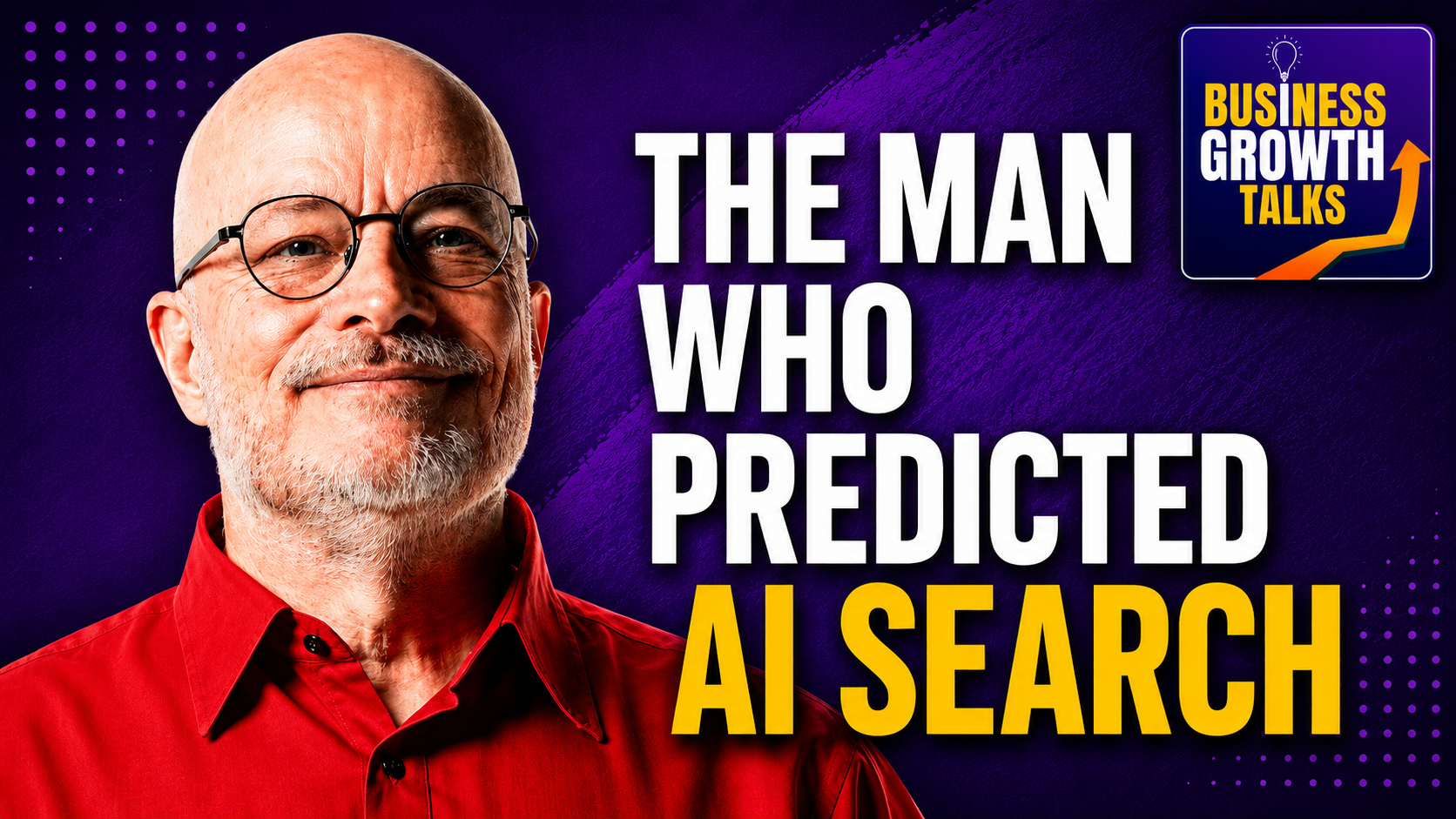
Welcome back to the blog! In our latest episode, we dove deep into a concept that's set to redefine how businesses approach online visibility: Answer Engine Optimization (AEO). If you haven't listened yet, I highly recommend you tune into "The Man Who Predicted AI Search (And Was Ignored for Years) With Jason Barnard". In this post, we'll expand on the pivotal ideas discussed in the episode, exploring what AEO means for businesses in the rapidly evolving landscape of 2026 and beyond. As artificial intelligence becomes the primary interface for information retrieval, understanding and implementing AEO is no longer an option, but a necessity for survival and growth.
The Dawn of the Answer Engine
For years, the internet has been a vast library, and Search Engine Optimization (SEO) was our librarian, helping us find the right books (websites) through keywords. But the way we seek information is undergoing a seismic shift. We're moving from a search-and-browse paradigm to an ask-and-receive model. Imagine asking your digital assistant a complex question, and instead of a list of links, you get a direct, synthesized answer. This is the era of the "Answer Engine." These aren't just search engines anymore; they are intelligent systems designed to understand context, synthesize information, and provide definitive answers. This fundamental change necessitates a new approach to how we ensure our brands are not just found, but understood and represented accurately within these emergent AI-driven information ecosystems. This is where Answer Engine Optimization, or AEO, comes into play. It's not just about ranking; it's about being the authoritative, trusted source that AI systems turn to when providing answers to user queries.
What is Answer Engine Optimization (AEO)?
Answer Engine Optimization (AEO) is the strategic process of ensuring your brand and its associated information are understood, trusted, and accurately represented by AI-powered information retrieval systems. Unlike traditional SEO, which focuses on driving traffic to a website by ranking for specific keywords, AEO is about becoming the authoritative source that AI models leverage to generate direct answers. Think of it as moving from being a destination to being the source of truth. It’s about making your brand’s knowledge, data, and expertise accessible and comprehensible to AI algorithms, so that when a user asks a question that your brand can answer, the AI provides *your* brand’s information as the definitive response. This involves not only optimizing your content for search engines but also for the sophisticated algorithms that power AI chatbots, virtual assistants, and advanced search interfaces. It’s about building a digital footprint that AI can easily digest, understand, and trust. This means moving beyond keyword stuffing and meta descriptions to a more nuanced approach that emphasizes factual accuracy, comprehensive data, and a clear, consistent brand narrative that AI can interpret and relay.
The Pillars of AEO
AEO is built on several key pillars:
- Data Accuracy and Veracity: AI systems rely on facts. Ensuring your brand's data is accurate, up-to-date, and verifiable is paramount.
- Entity Recognition and Understanding: AI needs to understand your brand as an entity – its products, services, mission, and values – and how it relates to other entities.
- Topical Authority: Demonstrating deep expertise in your niche is crucial. AI will favor sources that are recognized as authorities on a given subject.
- Structured Data and Knowledge Graphs: Making your information easily digestible by AI through structured data formats and contributing to knowledge graphs helps AI understand relationships and context.
- Brand Consistency: A unified brand message across all digital touchpoints is vital for AI to form a cohesive understanding of your brand.
AEO vs. Traditional SEO: A Paradigm Shift
The distinction between AEO and traditional SEO is fundamental. Traditional SEO aimed to improve a website's ranking in search engine results pages (SERPs) for specific keywords. The goal was to attract users to click through to your website where they would then consume your content and hopefully convert. AEO, on the other hand, prioritizes providing direct answers. The user might not even visit your website. Instead, the AI directly answers their question using your brand's information. This shift is profound. It means that the success metric changes from website traffic and click-through rates to being the recognized, authoritative source for an answer. For businesses, this means a potential decrease in direct website traffic from certain queries, but a significant increase in brand recognition and trust as the go-to source of information. It’s a move from being a participant in a search results list to being the definitive answer itself. This requires a strategic rethinking of content creation, data management, and brand positioning. Instead of optimizing for a human’s keyword search, we are optimizing for an AI's understanding and synthesis of information.
Key Differences
- Objective: SEO aims for website ranking and traffic; AEO aims for direct answers and brand authority.
- User Journey: SEO leads users to a website; AEO provides answers directly to the user, often without a website visit.
- Content Focus: SEO prioritizes keyword relevance and user intent for clicks; AEO prioritizes factual accuracy, comprehensiveness, and clarity for AI interpretation.
- Metrics: SEO focuses on rankings, traffic, and conversions; AEO focuses on answer prominence, brand mentions in AI responses, and trust signals.
The Critical Role of Your Digital Footprint in the Age of AI
Your digital footprint is your brand's online presence – everything from your website content and social media profiles to online reviews, news mentions, and even forum discussions. In the age of AI, this footprint becomes the primary training ground for algorithms that are learning to understand and represent your brand. Jason Barnard, whom we featured in our episode, emphasizes the critical nature of this digital footprint. AI systems, especially Large Language Models (LLMs), are trained on vast datasets, and your brand's digital presence is a significant part of that data. If your digital footprint is inconsistent, inaccurate, or incomplete, AI will struggle to form a clear and accurate understanding of your brand. This can lead to misrepresentations, missed opportunities, and a loss of visibility. Therefore, actively managing and cultivating a robust, accurate, and consistent digital footprint is no longer just good practice; it's a fundamental requirement for successful AEO. Every piece of content, every interaction, and every mention contributes to this footprint, shaping how AI perceives and presents your brand to the world. It’s about ensuring that the signals AI is receiving about your brand are positive, authoritative, and aligned with your business objectives.
Building a Strong Digital Footprint
- Consistent Branding: Maintain uniform branding elements (logos, colors, tone of voice) across all platforms.
- High-Quality Content: Produce accurate, valuable, and well-researched content that demonstrates expertise.
- Structured Data: Implement schema markup to help search engines and AI understand the context of your content.
- Reputation Management: Monitor and respond to online reviews and mentions to ensure a positive and accurate perception.
- Third-Party Validation: Seek out authoritative backlinks, media mentions, and industry awards to bolster credibility.
Training the Algorithms: How Brands Can Influence AI Understanding
One of the most empowering aspects of AEO is the ability for brands to actively influence how AI understands them. This isn't about manipulating algorithms; it's about providing them with the right kind of data in a format they can easily process. Jason Barnard highlights this as a crucial step, particularly for smaller businesses. By consistently publishing high-quality, factual content that clearly articulates your brand's offerings, expertise, and value proposition, you are effectively "training" the AI. This involves making your information easily accessible and understandable. Techniques like using structured data (e.g., JSON-LD) to define entities and their relationships, and ensuring your website is semantically rich, helps AI connect the dots. Furthermore, contributing to knowledge graphs and participating in authoritative online communities where your brand’s expertise can be showcased and validated also plays a significant role. The more clear, consistent, and authoritative signals your brand sends into the digital ecosystem, the more likely AI systems are to accurately represent you as the go-to source for relevant information. This is an ongoing process, requiring continuous effort and adaptation as AI technology evolves.
Practical Steps for Algorithm Training
- Develop a Knowledge Graph for Your Brand: Map out your key entities (products, services, people, locations) and their relationships.
- Create Definitive Content Hubs: Establish comprehensive resources that thoroughly cover your areas of expertise.
- Utilize Entity Extraction Tools: Understand how AI might extract information about your brand.
- Contribute to Open Knowledge Bases: Where appropriate, share your structured data with platforms that build public knowledge graphs.
- Engage with AI-Powered Tools: Experiment with how AI models respond to queries about your brand and adjust your strategy accordingly.
Key Strategies for AEO Success in 2026
As we look towards 2026, the strategies for achieving Answer Engine Optimization will become increasingly sophisticated. Beyond the foundational elements of a strong digital footprint and accurate data, several key areas will be critical for success:
1. Embrace Semantic Search and Intent Understanding
AI-powered engines are moving beyond keyword matching to truly understanding the intent behind a query. This means your content needs to be not just keyword-rich but semantically rich, addressing the underlying needs and questions users have. Think about the natural language questions your audience asks and provide comprehensive, nuanced answers. This involves creating content that is conversational, informative, and directly addresses the user's problem or curiosity. For instance, instead of just writing about "shoes," create content that answers questions like "What are the best running shoes for flat feet?" or "How do I clean suede sneakers?"
2. Prioritize Entity-Based Optimization
AI systems are increasingly treating information as entities – people, places, organizations, products, concepts – and understanding the relationships between them. Your AEO strategy must focus on clearly defining your brand as an entity and establishing its connections to relevant concepts and other entities. This can be achieved through structured data markup, clear internal linking that reinforces relationships, and ensuring consistent naming conventions across all your digital platforms. The goal is to make it easy for AI to recognize your brand as a distinct and authoritative entity within its knowledge base.
3. Leverage Knowledge Graphs and Structured Data
Knowledge graphs are the backbone of many AI information systems, allowing them to represent complex relationships between entities. By structuring your website data using schema markup (like Schema.org), you are essentially feeding your information into a format that AI can easily ingest and understand. This goes beyond simple keywords; it’s about providing rich context. For example, using specific schema for products, services, events, or organizations helps AI understand the attributes and connections associated with your brand, making it more likely to be cited as an authoritative source.
4. Develop a Robust Content Strategy Focused on Answerability
Your content needs to be designed with AEO in mind. This means creating comprehensive, authoritative, and easily digestible pieces that directly answer potential user questions. Think about the "moments of truth" for your audience – the specific questions they need answers to at different stages of their journey. Your content should aim to be the definitive answer for those moments. This might involve creating detailed guides, FAQs, how-to articles, and explainer videos that are not only informative but also structured in a way that AI can easily extract key information.
5. Foster Trust and Authority Signals
In the age of AI, trust is paramount. AI systems are being designed to prioritize authoritative and trustworthy sources. This means actively building signals of credibility, such as:
- Expert authorship: Clearly identify authors and their credentials.
- Third-party endorsements: Earn backlinks from reputable sites, secure media mentions, and gather positive reviews.
- Transparency: Be clear about your sources, methodology, and any potential biases.
- Longevity and consistency: A long-standing, consistent presence of accurate information builds trust over time.
These signals help AI distinguish between reliable information and misinformation.
Leveraging LLMs, Knowledge Graphs, and AI-Driven Search
The tools and technologies powering Answer Engine Optimization are rapidly evolving. Large Language Models (LLMs) like those behind ChatGPT and Bard are becoming increasingly sophisticated at understanding natural language and synthesizing information. Knowledge graphs provide the structured framework that AI uses to organize and connect this information. AI-driven search engines are then built on these capabilities to provide direct, intelligent answers. For businesses, this presents an opportunity to engage with these technologies directly. By understanding how LLMs process information and how knowledge graphs are constructed, you can better tailor your digital assets for optimal AI interpretation. This might involve experimenting with prompt engineering to see how AI responds to queries about your brand, analyzing the outputs, and then refining your content and data to ensure accuracy and clarity. Furthermore, many AI-driven search platforms are still in their nascent stages, and those who proactively adapt to their specific requirements will gain a significant first-mover advantage.
Key Technologies to Watch
- Large Language Models (LLMs): Understand their capabilities in understanding and generating human-like text.
- Knowledge Graphs: Focus on structuring your data in a way that facilitates entity recognition and relationship mapping.
- AI-Powered Search Engines: Stay updated on emerging platforms that prioritize direct answers over links.
- Vector Databases: As AI processing advances, these will become crucial for storing and retrieving complex data for LLMs.
The Enduring Importance of Human-Centric Marketing
While AEO focuses on optimizing for AI, it’s crucial to remember that at the heart of it all are humans. AI is a tool to better serve human needs and provide better experiences. Therefore, human-centric marketing remains indispensable. The most effective AEO strategies will be those that enhance, rather than replace, human connection and satisfaction. A strong base of satisfied customers who engage with your brand, leave positive reviews, and share their experiences online naturally contributes to a strong digital footprint that AI can leverage. Moreover, the ultimate goal of AEO is to provide valuable answers that solve human problems. This requires a deep understanding of your audience's needs, pain points, and aspirations. By continuing to prioritize excellent customer service, building genuine relationships, and creating products and services that truly resonate with people, you are laying the groundwork for a powerful and trustworthy brand presence that AI will undoubtedly recognize and reward. The human element provides the context and purpose for the data that AI processes.
Maintaining a Human Touch
- Focus on Customer Value: Always prioritize delivering exceptional value and solving genuine problems for your customers.
- Encourage Engagement: Foster communities and encourage dialogue with your audience.
- Gather Feedback: Actively solicit and respond to customer feedback to continuously improve.
- Personalization: While AI can help personalize, the core of effective personalization stems from understanding individual human needs.
Conclusion: Embracing the Future of Brand Visibility
The digital landscape is in constant flux, and the advent of Answer Engine Optimization marks a significant evolutionary leap. As we've explored in this post, and as passionately discussed in our latest episode, "The Man Who Predicted AI Search (And Was Ignored for Years) With Jason Barnard," the way we retrieve and consume information is fundamentally changing. Businesses that fail to adapt to this new paradigm risk becoming invisible. Answer Engine Optimization is not just a technical adjustment; it's a strategic imperative. It demands a deep understanding of how AI systems process information, a commitment to data accuracy and authority, and a renewed focus on building a robust, consistent digital footprint. By embracing AEO, you are not just optimizing for search engines; you are optimizing for the future of information retrieval, ensuring your brand remains visible, trusted, and at the forefront of customer engagement in the age of artificial intelligence. The journey ahead requires agility, a willingness to learn, and a proactive approach to shaping your brand’s narrative in the evolving AI ecosystem. Let's seize this opportunity to build a more intelligent, accessible, and ultimately, more visible brand for the future.

The Art of Storytelling: How to Convert Listeners into Loyal Clients